Restaurant Bookkeeping 101: What Every Owner Needs to Track
Restaurant bookkeeping is a different animal. Between daily sales from multiple POS terminals, tipped employees, food cost tracking, vendor invoices piling up, and the constant cash flow pressure of a thin-margin business, keeping the books straight requires a specific set of skills. Here is what restaurant owners need to know.
Your POS System Is Not Your Bookkeeping System
Toast, Square, SpotOn, Clover. They all track sales. None of them are bookkeeping software. Your POS tells you how much you sold today. Your bookkeeping system tells you whether you actually made money after paying for food, labor, rent, and everything else. These are two different questions, and confusing them is how restaurant owners end up cash-poor despite busy nights.
Your POS data needs to be reconciled into QuickBooks or whatever accounting system you use. Daily sales should be matched against bank deposits. Tips paid out need to be recorded. Discounts and comps need to be tracked. This reconciliation is where most restaurant bookkeeping falls apart.
Track Your Prime Cost Weekly
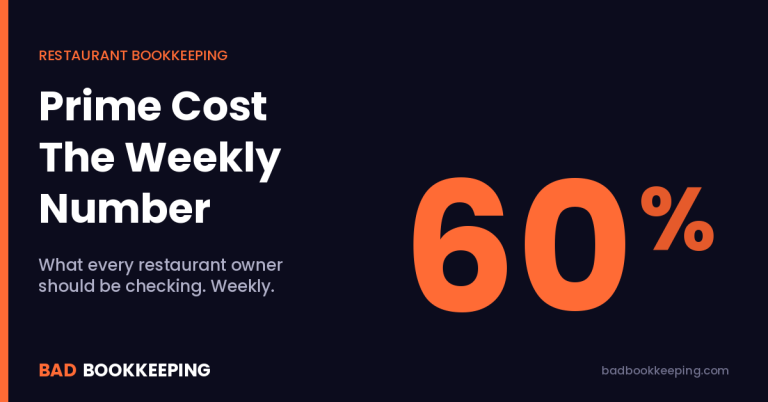
Prime cost is your total cost of goods sold (food and beverage) plus total labor cost. For most restaurants, this should be between 55% and 65% of revenue. If you do not know your prime cost, you do not know if your restaurant is healthy. Period.
Tracking this monthly is fine. Tracking it weekly is better. The sooner you spot a spike in food costs or labor, the sooner you can adjust. Waiting until your accountant tells you three months later is too late.
Food Cost Requires Actual Inventory Counts
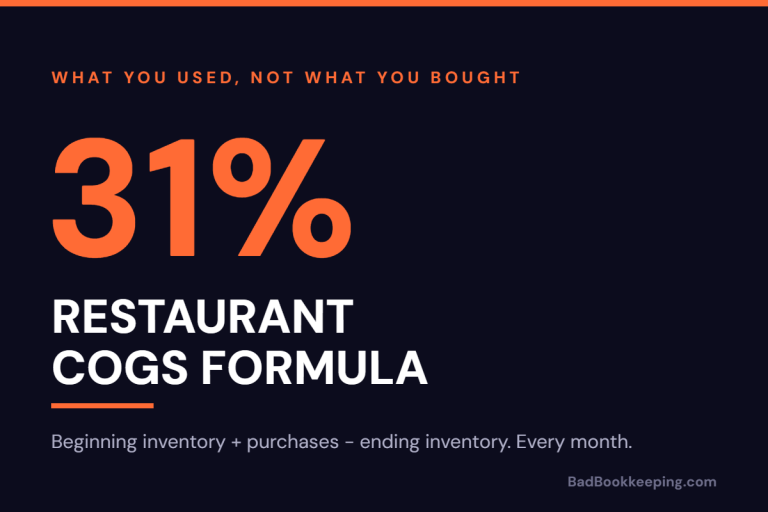
You cannot calculate food cost accurately without doing physical inventory counts. At minimum, count your inventory at the end of every month. The formula is simple: beginning inventory plus purchases minus ending inventory equals cost of goods sold. Divide that by your food revenue and you have your food cost percentage.
Most restaurants should target a food cost between 28% and 35% depending on the concept. If yours is higher, look at portion control, waste, theft, and vendor pricing. These are all things that show up in the numbers if someone is actually tracking them.
Tip Reporting Is Not Optional
Employee tips need to be reported accurately for tax purposes. This includes credit card tips, cash tips reported by employees, and tip pools. If your bookkeeper is not tracking this properly, you are exposed to IRS penalties and your employees are exposed to incorrect W-2s.
Separate Your Accounts
If you are paying personal expenses out of your business account or depositing business income into a personal account, stop. This is the fastest way to make your bookkeeping impossible and your tax situation a nightmare. One business checking account, one business credit card, and no mixing. It sounds basic because it is. But we see this problem in nearly every restaurant cleanup we do.
Get Help Before Tax Season
Restaurant bookkeeping is complex enough that most owners should not be doing it themselves. The cost of a professional bookkeeper is almost always less than the cost of the mistakes you will make doing it on your own. And unlike a bad hire in the kitchen, a bookkeeping mistake can cost you thousands in overpaid taxes, missed deductions, or IRS penalties.
If your restaurant books are behind or you are not tracking the metrics above, we specialize in exactly this kind of cleanup. We work with restaurants across DFW and nationwide.
Ready to talk to a human about your books?
Book a free 15-minute discovery call. We’ll talk through your situation, tell you what it would take to fix, and give you a real quote. No pressure, no sales pitch.