Tip Pool Accounting: Tracking the Money That Is Not Yours
Every service, your restaurant closes out holding a pile of money that does not belong to you. Card tips settle into your bank account alongside the sales. Cash tips move through the drawer. Somewhere in there, sales tax is waiting for the state to come collect it. Your job is to get every dollar to the right place and be able to prove you did. That is tip pool accounting, and most restaurants are running it on vibes.
The pool part makes it worse. Servers tip out bussers and bartenders, the split runs on hours or points, and the record lives in a spreadsheet, or a text thread, or one very confident manager’s head. Meanwhile the bank feed in QuickBooks is booking the whole card batch to Sales and calling it a day.
Here is how the accounting is supposed to work, and the five places it usually goes wrong:
- Tips booked as revenue instead of a liability
- A tip pool with no paper trail, or the wrong people in it
- Card tips tangled up in batched deposits
- Auto-gratuity treated like a tip, which the IRS disagrees with
- Payroll that never clears the pool to zero
1. Tips are not revenue. They are a liability
The moment a guest leaves a tip, that money belongs to the employee. Your restaurant is the courier, not the recipient. In the books, card tips should land in a liability account, call it Tips Payable, and sit there until payroll pays them out. They should never touch your sales.
Book tips as revenue and three things break at once. Your top line inflates, which quietly wrecks food cost and prime cost, because both are measured against sales. Then on payday the “revenue” walks back out the door dressed as an expense, and your margins look wrong in both directions. And if the POS mapping is careless, you can end up computing sales tax on money that was never yours. Nobody wants to explain that one to the Comptroller.
Quick check: run a P&L and look for tips hiding inside your income accounts. If Tips Payable does not exist in your chart of accounts, it is not because you have no tips.
2. The tip pool needs a paper trail, and the right people in it
A tip pool is a written policy, not a tradition. Who contributes what percentage, how the split works (hours, points, role weights), and when it pays out. Federal labor law is blunt about two things: managers and supervisors never take from the pool, and if you pay the tipped minimum of $2.13 and claim the tip credit, the pool stays with employees who customarily receive tips. Back-of-house can only share when everyone is paid full minimum wage with no tip credit.
We are bookkeepers, not labor lawyers, and this is not legal advice. But we can tell you what happens when a dispute shows up: everyone asks for the records. Your books should trace every pooled dollar from the POS report to the split to the paycheck, for every pay period, without an archaeology project.
Quick check: pick one pay period and follow one server’s card tips end to end. If the trail dies in a text thread, you have found the problem.
3. Card tips arrive tangled in the deposit
Tuesday’s $4,000 card batch is not $4,000 of sales. It is sales, plus sales tax, plus tips, minus processing fees, and it lands on Thursday. If the bank feed books that deposit straight to Sales, you have overstated revenue, buried the fees, and erased the tip liability in one click.
The fix is the daily sales summary entry: one entry per day, straight from the POS close-out report, that splits food and beverage sales, sales tax payable, and card tips into Tips Payable. The deposit then matches against that entry, fees and all, instead of being guessed at by the feed.
Quick check: compare one busy day’s POS sales to what your books recorded as sales for that day. If the books number happens to equal the bank deposit, your revenue currently includes other people’s money.
4. Auto-gratuity is not a tip
The 18% your POS adds to parties of eight is a service charge, not a tip. The IRS drew that line years ago, in Revenue Ruling 2012-18, if you enjoy that sort of reading. A tip is voluntary, in an amount the guest chooses. A charge the house requires is revenue to the restaurant, and when it is paid out to staff it is regular wages, not tips. Different W-2 treatment, and it even changes overtime math, because service charges count toward the regular rate of pay.
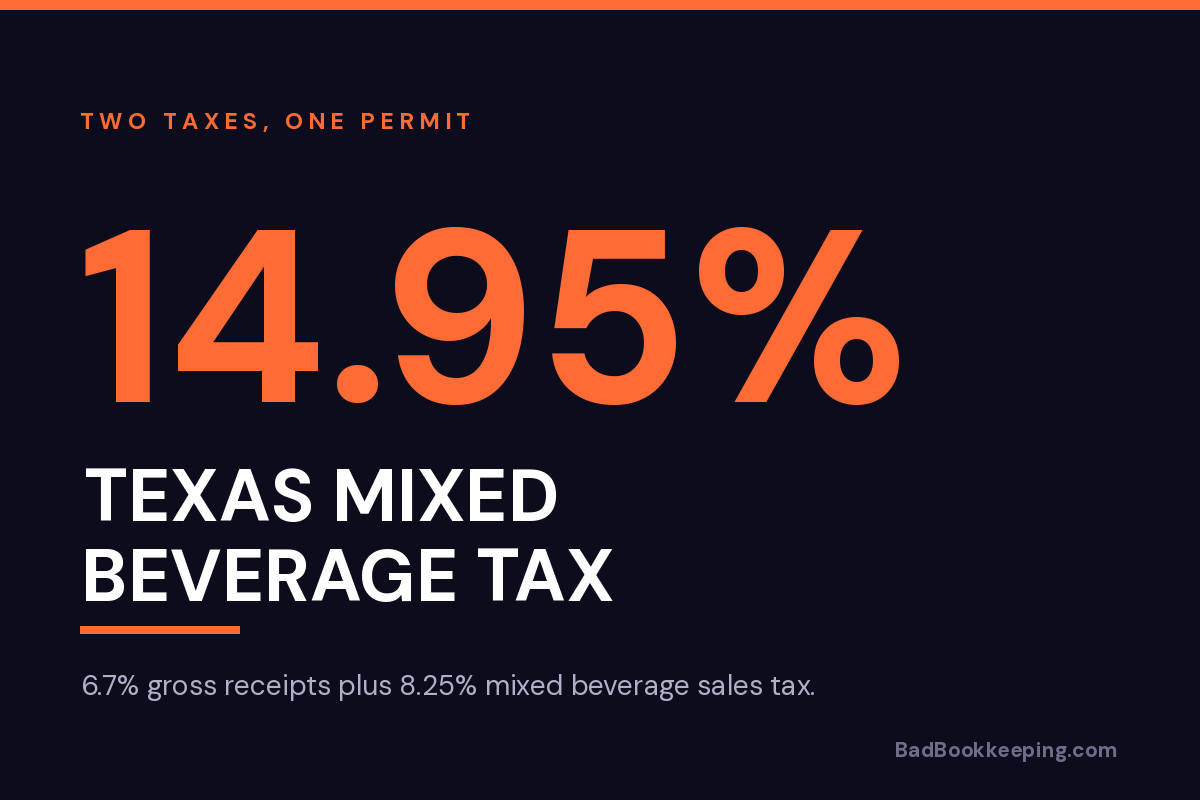
In Texas there is a sales tax wrinkle on top: whether a mandatory gratuity is taxable depends on its size and where the money actually goes. We wrote up the Texas-specific mess, tips and mixed beverage taxes included, in DFW Restaurant Bookkeeping: Sales Tax, Tips, and the Texas Stuff.
Quick check: if your POS lumps auto-grat and voluntary tips into one number, split them now. Your payroll company cannot un-bake that cake in January.
5. Payroll has to clear the pool to zero
Here is the loop working correctly. The POS reports tips daily, and Tips Payable accrues. The pool sheet allocates them per the written policy. Payroll pays them out, withholds the taxes, and Tips Payable returns to zero. Cash tips taken home that night still run through payroll for reporting and withholding. They just do not get paid twice.
Where it goes wrong: tips paid nightly out of the drawer with no entry anywhere. A pool spreadsheet that disagrees with what payroll actually paid. A Tips Payable balance that drifts upward for months. A liability account that only ever grows means somebody is being shorted or the books are wrong, and neither is a great option.
Two IRS items worth knowing while you are here. Larger restaurants file Form 8027, which compares reported tips to receipts and allocates the difference when reporting runs light. And the FICA tip credit, claimed on Form 8846, gives back the employer share of Social Security and Medicare paid on most reported tips. Owners leave that credit on the table constantly, which is a shame, because it is one of the few times the IRS is trying to hand you money.
Quick check: look at Tips Payable the day after payroll. It should be at or near zero. If the balance is old enough to have a birthday, that is your cleanup.
Three numbers, one match
Good tip pool accounting comes down to a weekly habit: POS tips, pooled tips, and payroll tips should agree to the dollar. A daily sales entry that separates the money. A pool sheet that matches the written policy. A payroll run that clears the liability. When those three numbers match, servers trust the math, W-2 season is boring, and nobody spends a Friday night reconstructing February from a group chat.
If your current system is “the deposit shows up and we trust the POS,” you are not alone, and it is fixable, usually faster than owners expect. We untangle tip pools for a living. That is not the career any of us predicted, but here we are.
Does your tip pool actually balance?
We set up tip pool accounting that ties POS to payroll to the penny: tips out of your revenue, a liability that clears every pay period, and W-2s nobody argues with. The call is free and takes 15 minutes.
Book a Free Call