DFW Restaurant Bookkeeping: Sales Tax, Tips, and the Texas Stuff
Running a restaurant in Dallas, Fort Worth, Arlington, Plano, or anywhere in the DFW metroplex comes with a bookkeeping reality that’s different from what a generic online bookkeeper can handle. Texas rules, Texas taxes, and the specific economics of the DFW restaurant scene all matter.
Here’s the stuff that trips up DFW restaurant owners and the generalists they hire.
Texas Sales Tax on Food: It’s Not Simple
Texas taxes prepared food at 8.25% in most DFW cities (6.25% state plus local). That part’s easy. The hard part is knowing what counts as “prepared food” and what doesn’t.
Examples that catch owners off guard:
- Bakery items sold in quantities of 6 or more without utensils or plates: generally not taxable
- Single bakery items or sold with a plate/utensil: taxable
- Bottled water sold to go: not taxable
- Bottled water sold with a meal: taxable
- Coffee beans by the pound: not taxable
- Hot coffee in a cup: taxable
If your POS isn’t set up to handle these distinctions correctly, you’re either overcollecting (and customers are paying too much) or undercollecting (and you owe the state the difference out of your own pocket at audit time).
Mixed Beverage Gross Receipts Tax
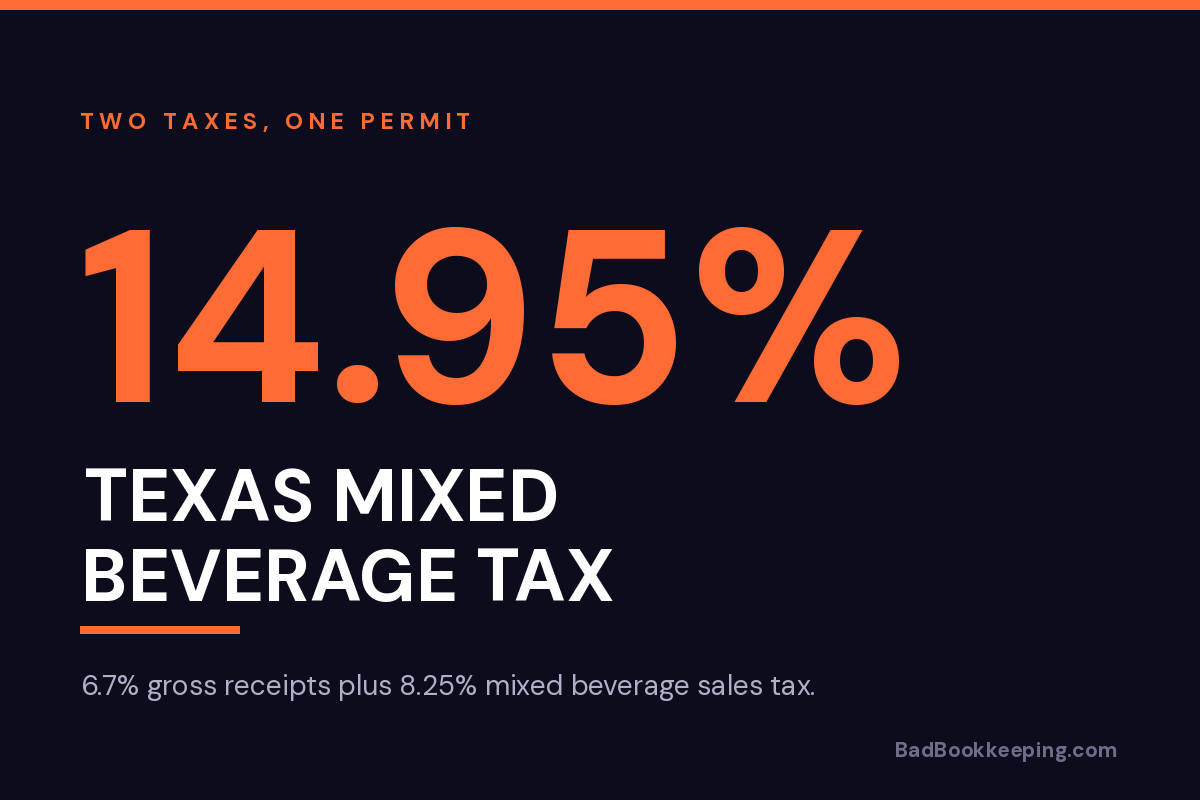
If you serve liquor, beer, or wine in Texas, you’re dealing with the Mixed Beverage Gross Receipts Tax — 6.7% on the seller, separate from the 8.25% Mixed Beverage Sales Tax on the customer.
This is a line item in your books that a generic bookkeeper will miss, misclassify, or lump into sales tax. It’s not. It’s a separate tax, filed separately, and it hits your P&L differently.
If you see this line on your P&L under “Sales Tax Expense” instead of its own dedicated account, your books need work.
Tip Reporting and Payroll Taxes
Tips are payroll territory but they bleed into bookkeeping because the numbers have to reconcile. Three things go wrong constantly:
- Cash tips not reported through payroll. The IRS is clear: employees have to report tips of $20+ per month, and employers owe matching FICA on those tips.
- Auto-gratuity (mandatory service charges on large parties) treated as a tip. It’s not. It’s wages. Different tax treatment entirely.
- FICA tip credit not claimed on the tax return. This is a federal tax credit for the employer’s share of FICA on reported tips, and most restaurants leave thousands of dollars a year on the table.
POS Reconciliation: The Daily Discipline
Your Toast, Square, Clover, or SpotOn POS is the source of truth for sales. Your bank deposits are what actually landed. The two should match. They often don’t, for reasons including:
- Credit card processor holds rolling reserves
- Fees netted out of deposits instead of shown separately
- Chargebacks
- Gift card sales (deferred revenue, not current revenue)
- Cash drawer shortages
- Delivery platform commissions (DoorDash, Uber Eats, Grubhub) — gross vs net reporting
If your bookkeeper is just recording the net deposit as sales revenue, you’re missing a huge chunk of real sales AND you have no idea what you’re paying in fees. Daily POS-to-bank reconciliation is non-negotiable.
Food Cost and Prime Cost Tracking
A DFW restaurant bookkeeper who doesn’t track food cost and prime cost as a percentage of sales every month is giving you a bookkeeper, not a restaurant bookkeeper.
The two metrics that matter:
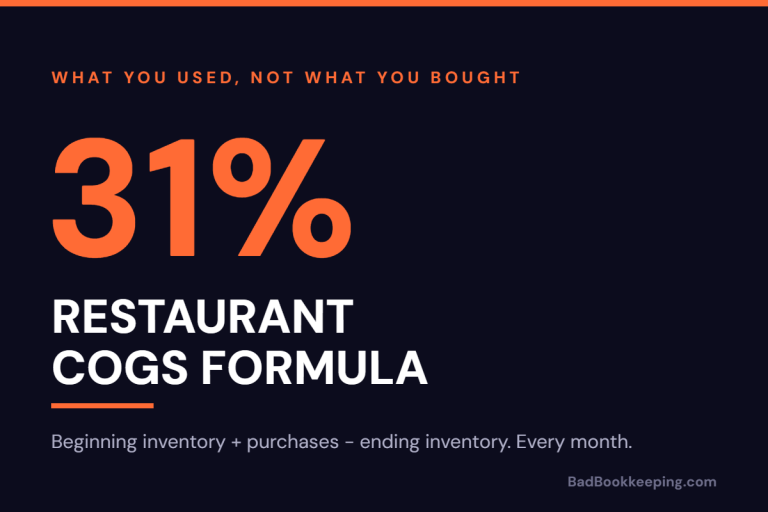
- Food cost percentage = cost of food sold / food sales. Industry target is usually 28-35% depending on concept.
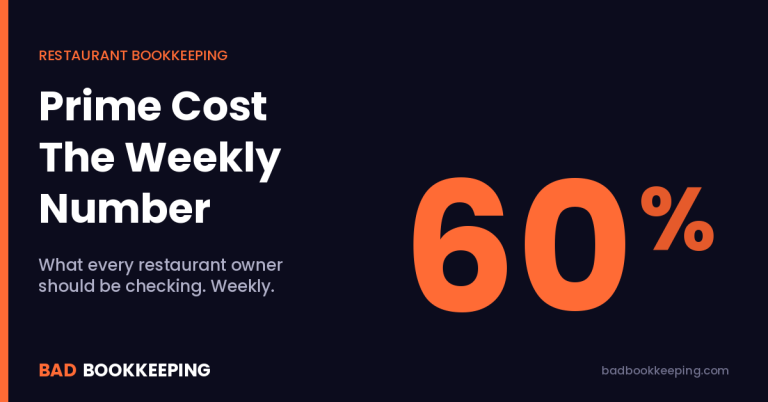
- Prime cost = (cost of goods + labor) / total sales. Healthy restaurants run 55-65%.
If your P&L doesn’t make these easy to see at a glance, you’re flying blind on the two biggest cost drivers in your business.
1099s for Your Contractors
DFW restaurants use a lot of 1099 labor — cleaners, handymen, delivery drivers, musicians, entertainers, influencers, occasional cooks. Every vendor you pay $600 or more in a calendar year needs a 1099-NEC by January 31.
This requires you to have a W-9 on file before you pay them. Good bookkeeping sets this up as a workflow, not a January panic.
Texas-Specific Things Out-of-State Bookkeepers Get Wrong
- No state income tax — but that doesn’t mean no filings. Texas has franchise tax (a.k.a. the “no-tax-due” threshold sits around $2.47M in 2026 revenue).
- TABC permits for liquor — renewal fees are operating expenses, not COGS
- City-specific permits — Dallas, Fort Worth, and Plano all have their own health department and business license requirements that show up in your books
- Property tax on business personal property — your kitchen equipment, furniture, and smallwares all get taxed at the county level. The rendition is due April 15 every year.
The Bottom Line
DFW restaurant bookkeeping isn’t just bookkeeping for a business that happens to serve food. It’s a specialty. The tax code, the POS ecosystem, the tip and labor rules, and the local permit landscape all require a bookkeeper who knows the industry.
If your current setup is a generalist who “also does restaurants,” you’re probably leaving money on the table and carrying unnecessary tax risk.
We specialize in small and mid-size DFW restaurants. Book a free 15-minute call and we’ll tell you exactly what your current books are missing.
Ready to talk to a human about your books?
Book a free 15-minute discovery call. We’ll talk through your situation, tell you what it would take to fix, and give you a real quote. No pressure, no sales pitch.